
Navigating Divorce
September 3, 2024
Supporting Your Children Through the Storm

Divorce is a challenging life event for everyone involved, but it can be particularly difficult for children. As parents, it's crucial to prioritize your kids' emotional well-being during this turbulent time. Here are some key strategies to help your children cope with divorce:
- Open Communication: Be honest with your children about the situation but do this in a developmentally appropriate, child-focused manner. Children DON’T need to hear all the details and hurt from your perspective. Children need to know that their needs will continue to be met. Encourage them to express their feelings and concerns openly.
- Maintain Routine: Kids thrive on stability. Try to keep their daily routines as consistent as possible, including school, activities, and time with friends.
- Co-Parent Cooperatively: Despite your differences, work together with your ex-spouse to make important decisions about your children. Present a united front to provide security and consistency.
- Avoid Blame: Never speak negatively about your ex-partner in front of the children. This can create loyalty conflicts and emotional distress.
- Reassure Love: Constantly remind your children that both parents love them unconditionally. Reassure them that the divorce is not their fault.
- Listen Actively: Pay attention to your children's verbal and non-verbal cues. Sometimes, they may not know how to express their feelings directly.
- Seek Professional Help: Consider family therapy or counseling to help everyone process their emotions in a healthy manner.
- Encourage Relationships: Support your children's relationships with extended family members on both sides. These connections can provide additional emotional support.
- Be Patient: Adjustment takes time. Your children may experience a range of emotions, including anger, sadness, and confusion. Allow them to process at their own pace.
- Take Care of Yourself: Remember that your well-being affects your children. Ensure you're addressing your own emotional needs to be better equipped to support your kids.
Remember, while divorce is undoubtedly challenging, many children of divorced parents grow up to be well-adjusted adults. By prioritizing your children's needs and fostering a supportive environment, you can help them navigate this difficult transition and emerge resilient.

Divorce Without the Courtroom: What Are Your Options?

Summer Madness - Planning Ahead

How Developmental Stages Should Shape Parenting Plans
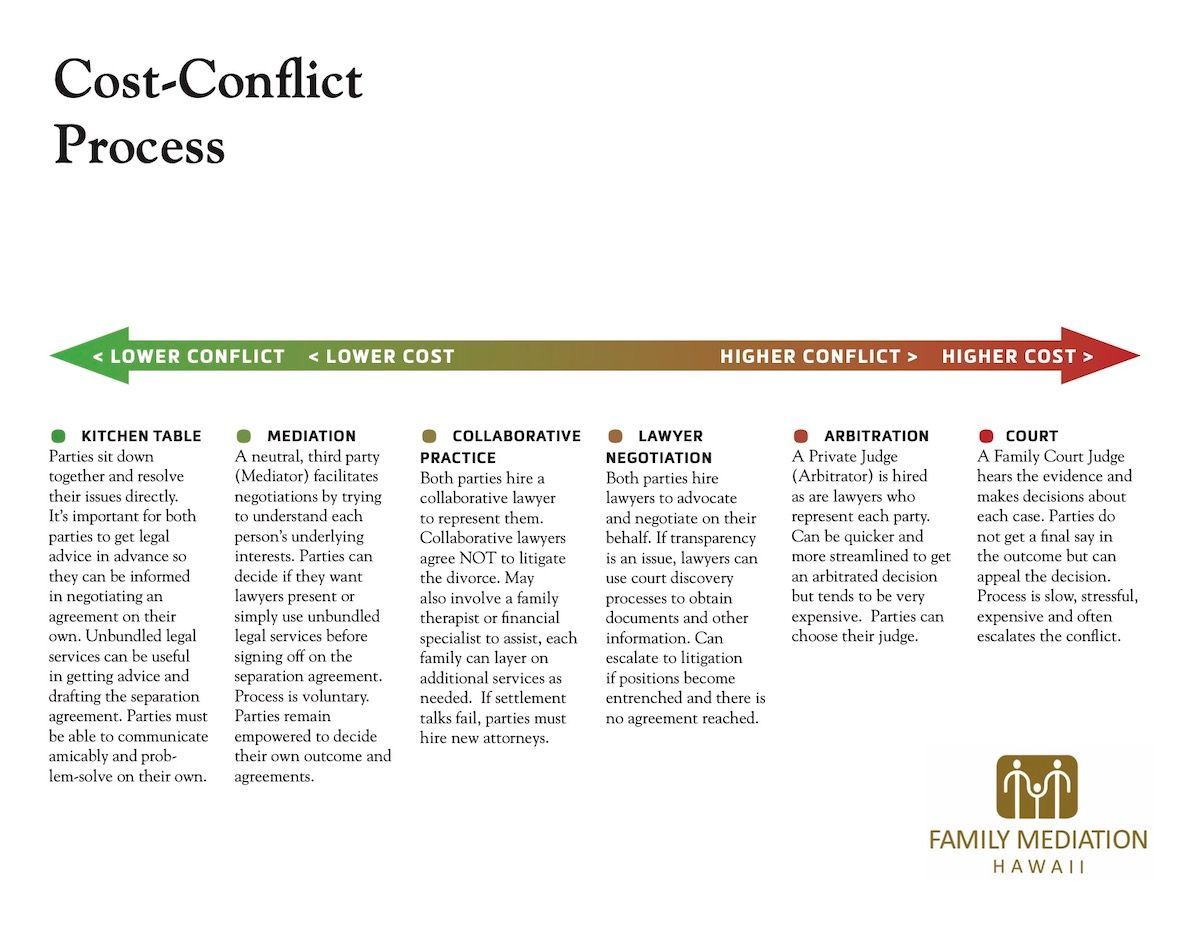
Understanding Your Divorce Options

Addressing Step-Parents, New Partners, and Co-Parenting Structures

Tips, Legal Considerations, and Co‑Parenting Guidance

Co-Parenting Tips for the School Year

If you're considering divorce in Hawaii, you’re likely navigating one of the most emotional and complex transitions of your life. You may be imagining long court battles, high legal fees, and months (or even years) of stress. But there’s another option— mediation —and it might be a better fit for your family, your finances, and your future. 1. Mediation is Less Expensive Than Court Legal fees can add up fast in a contested divorce. Between attorney retainers, filing fees, and court costs, traditional divorce can easily cost tens of thousands of dollars. Mediation, on the other hand, typically involves fewer billable hours and shared costs, making it a more affordable path forward. 2. It’s Quicker and More Flexible Court schedules can drag the divorce process out for months. Mediation sessions are scheduled at your convenience and often resolve issues much faster—sometimes in just a few sessions. It can be done either online or in person, giving you the flexibility to stay comfortable in your own space. You set the pace, not the court docket. 3. You Stay in Control In court, a judge makes the final decisions about your property, your finances, and your children. In mediation, you and your spouse work collaboratively with a neutral mediator to come to mutually agreeable solutions. This can feel more empowering and less adversarial. 4. It’s Private and Confidential Court proceedings are public record. Mediation, by contrast, is confidential. Sensitive family matters—like parenting concerns or financial struggles—stay private and are handled with discretion and compassion. 5. It’s Better for Co-Parenting If you’re raising children together, your relationship with your ex doesn’t end after the divorce is finalized. Mediation fosters communication and cooperation, which can lay the foundation for healthier co-parenting. Children benefit when parents can work together respectfully—even after separation. 6. It Honors Hawaii’s Cultural Values At Family Mediation Hawaii, we recognize the importance of aloha, ohana, and community. Mediation allows families to navigate change with respect and dignity, guided by culturally aware mediators who understand the local landscape. Is Mediation Right for You? If you and your spouse are willing to sit down with a neutral third party to discuss your options, mediation could be a great fit. Even in high-conflict situations, mediation can provide a calmer space to work through tough topics. 📅 Ready to explore your options? Fill out this intake form for a free consultation with Family Mediation Hawaii today. Let’s find a peaceful path forward—together.

Selecting a Mediator: Key Considerations for Success

A Mediator's Perspective on Holiday Co-Parenting