
Cost, Conflict, and Control
Understanding Your Divorce Options
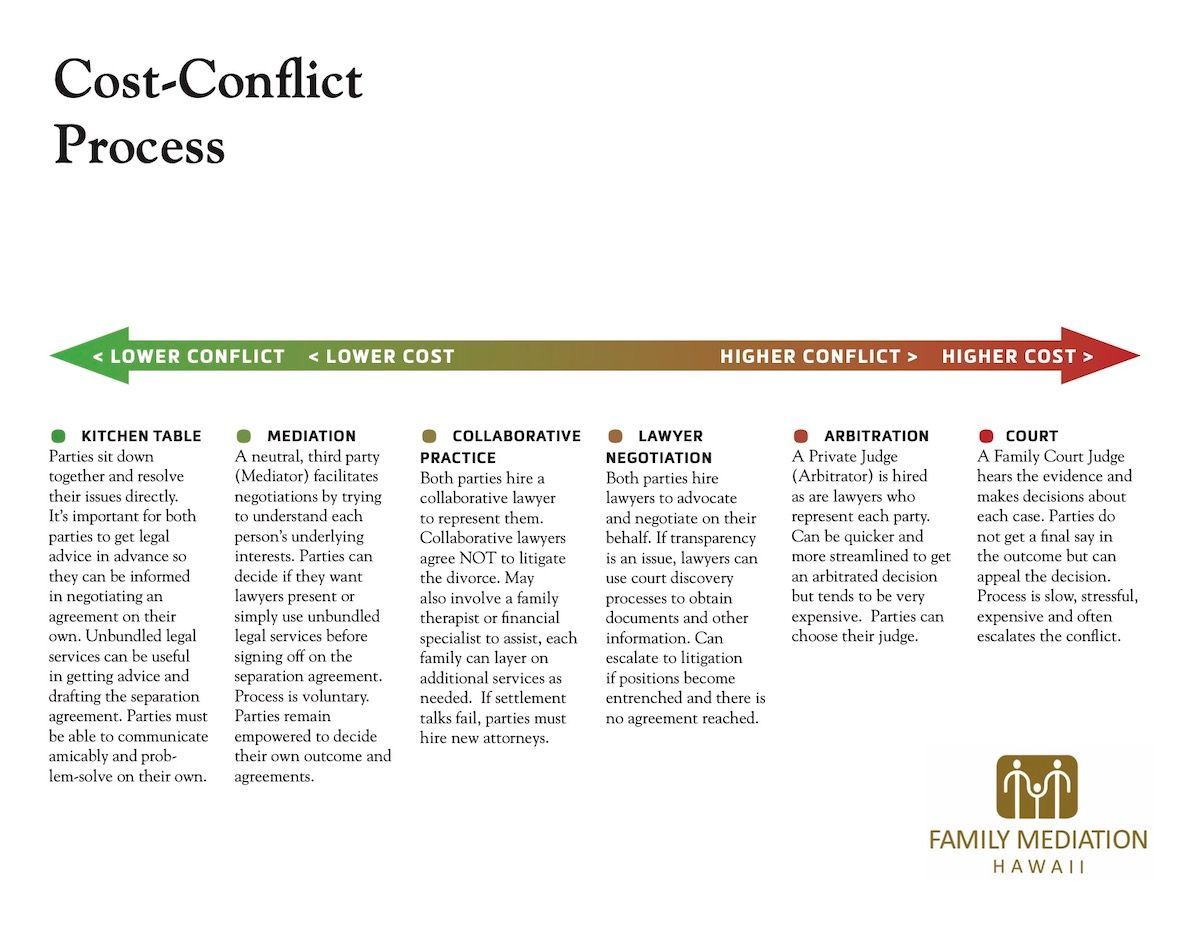
Understanding Your Divorce Options: Cost, Conflict, and Control
No two divorces are the same — but every separating couple faces a similar question: How do we get through this process in a way that minimizes cost, conflict, and stress?
Divorce doesn’t have to mean going to court. In fact, there are several ways to reach a resolution, each with different levels of cost, conflict, and control over the outcome. Below, we walk through the most common divorce processes, from the simplest “kitchen table” approach to full blown litigation.
1. Kitchen Table Divorce: Lowest Cost, Lowest Conflict, Highest Control
In a “kitchen table” divorce, couples sit down together to discuss and resolve their own issues — such as property division, parenting schedules, and support.
This approach works best when:
- Communication remains respectful and cooperative
- Both parties feel comfortable negotiating directly
- There is basic agreement on major issues
Even in this informal process, couples have the option to get legal advice in advance. Many couples use unbundled legal services — limited legal help for reviewing or drafting the separation agreement — to ensure their documents are complete and their agreements are legally enforceable.
This option is the least expensive and allows the parties to retain control over the final outcomes but requires both participants to solve their problems on their own.
If you’re looking to complete a Kitchen Table Divorce, there are some great free resources. The “Divorce Law in Hawaii” program is an educational Zoom session that discusses useful laws relevant to divorce in Hawaii. Sessions run every 3rd Wednesday of the month:
2. Mediation: Low Cost, Low to Moderate Conflict, High Control
In mediation, a neutral third party helps couples talk through disagreements and reach mutual decisions. The mediator doesn’t take sides or decide for you — instead, they facilitate a conversation and clarify interests so both voices are heard.
Mediation can include or exclude attorneys, depending on everyone’s comfort level. Some people consult a lawyer before mediation to get prepared, or after mediation to review the agreement before they sign.
Benefits:
- Voluntary and confidential
- Usually completed faster and at a fraction of the cost of litigation
- Empowers both parties to create durable, customized agreements
For many families, mediation is the best balance between cost, cooperation, and control.
3. Collaborative Practice: Moderate Cost, Moderate Conflict, Moderate Control
Collaborative divorce involves two specially trained collaborative lawyers, one for each spouse, who agree not to go to court. The process may also include professionals such as a family therapist or financial specialist to support communication and financial planning.
The collaborative model is ideal for families who need structure and professional support but want to avoid the adversarial nature of court.
However, if the process breaks down, both parties must hire new attorneys to litigate — which can increase costs. For the most part, parties still retain a high level of control over the outcome and lawyers are incentivized to settle or leave the case.
4. Lawyer Negotiation: Moderate to High Cost, Moderate to High Conflict, Moderate Control
In a lawyer-led negotiation, each spouse hires a traditional attorney to advocate and negotiate on their behalf. If one party withholds information, attorneys can use formal discovery tools to obtain financial or other documents.
While negotiation can lead to settlement, entrenched positions or emotional conflict can quickly escalate costs and stress. If lawyer negotiation does not resolve the issues, these cases often end up in court.
5. Arbitration: High Cost, High Conflict, Low Control
Arbitration is essentially a private judge making a decision for you. Both spouses hire lawyers and agree to have a Private Judge (Arbitrator) make binding decisions.
Because it’s private, arbitration can move faster than the court system and allow families to select a judge with specialized experience. However, it remains a high-cost, high-conflict option, as each side prepares and argues their case through attorneys. Additionally, the Arbitrator has the power to make legally binding decisions so parties give up control of the outcome with arbitration.
6. Court (Litigation): Highest Cost, Highest Conflict, Lowest Control
When all else fails, families turn to Family Court, where a judge hears evidence and makes legally binding decisions.
While necessary in some cases involving domestic violence, safety concerns, or total breakdowns in communication, court is often the slowest, most expensive, and most stressful path.
Court also removes control from the family — a judge, not the parents, decides what’s “best.” And while appeals are possible, they can add months (or years) of additional litigation.
Choosing the Right Process
When deciding how to proceed, consider these three factors:
- Conflict: How well can you communicate and cooperate?
- Complexity: Do you need professionals to help with finances, children, or communication?
- Control: Do you want to make your own decisions, or let a third party decide?
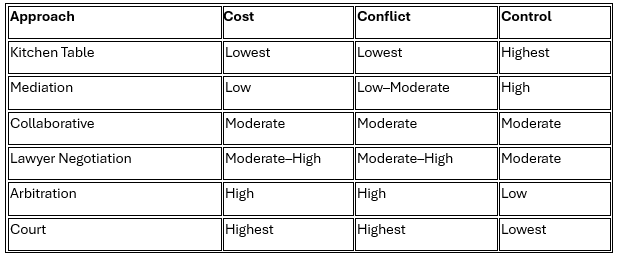
Here’s a summary of the considerations:
Final Thoughts
Divorce is never easy — but the approach you take can make a world of difference. Options like mediation and collaborative practice help preserve dignity, reduce emotional and financial strain, and support families in transitioning peacefully into their next chapter. Many families also find it helpful to use a combination of approaches, such as handling some issues through kitchen table discussions while bringing other matters to a mediator or other professional.
At Family Mediation Hawaii, we help families find the process that best fits their values, goals, and unique situation — because every family deserves a path forward with less conflict and more compassion.
Learn More About Mediation
We offer free phone consultations to help you understand the mediation process and determine if it’s the right fit for your family. Call us today for more information, or click the link below to get started.
Stay Informed with Family Mediation Hawaiʻi
Subscribe to our newsletter for tips, resources, and updates on mediation, co-parenting, and family well-being. Stay connected and get practical advice delivered straight to your inbox!